Bachelor of Engineering
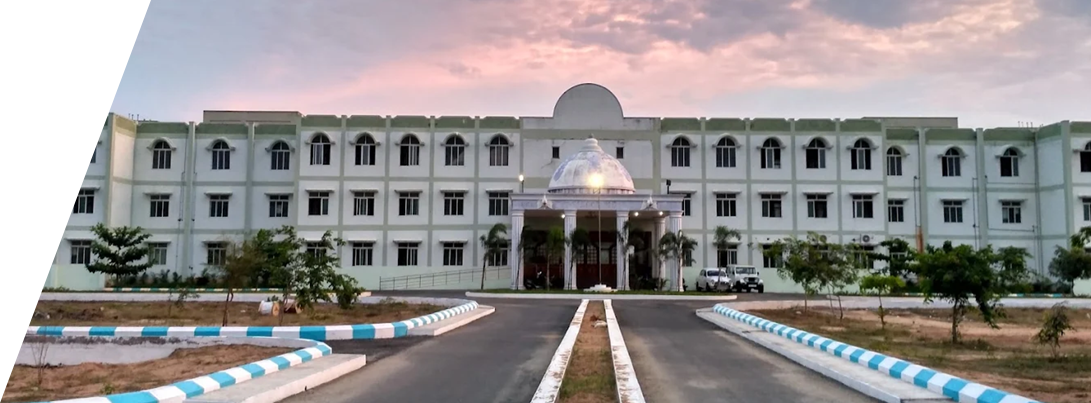
The Department of Civil Engineering at University College of Engineering, Pattukkottai (UCE-PKT), established in 2009, is one of the institution’s core academic pillars. The department plays a vital role in shaping future civil engineers capable of planning, designing, and executing sustainable infrastructure projects that contribute to national development.
With a team of experienced and dedicated faculty members, the department offers a stimulating learning environment supported by advanced laboratories, modern teaching tools, and project-based learning. Students are exposed to the latest advancements in structural design, environmental systems, water resources, geotechnical engineering, and transportation systems.
Through academic rigor, industrial exposure, and research orientation, the department emphasizes creativity, ethics, and innovation, preparing students to excel as professionals and entrepreneurs in the ever-evolving field of civil engineering.
The Bachelor of Engineering (B.E.) in Civil Engineering is a four-year undergraduate program designed under the Choice Based Credit System (CBCS) of Anna University, Chennai. The program equips students with a strong foundation in scientific principles and engineering practices essential for infrastructure development, urban planning, and environmental conservation.
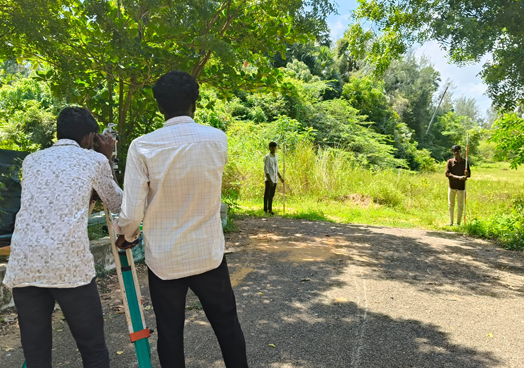
The curriculum blends theoretical knowledge, field work, and practical training, ensuring that students gain expertise in key areas such as Structural Analysis, Concrete Technology, Transportation Engineering, Environmental Engineering, Hydraulics, Geotechnical Engineering, and Surveying.
Students also undertake mini-projects, industrial visits, and internships to gain hands-on experience. The program encourages independent thinking and innovation through design projects, seminars, and research assignments.
The Civil Engineering curriculum is structured to meet global industry standards while aligning with Anna University’s academic regulations. It focuses on outcome-based learning, practical application, and the integration of sustainability principles.
The curriculum is periodically revised in line with the evolving trends in construction technology, smart infrastructure, and green engineering.
Graduates of the Civil Engineering program will be able to:
- Apply engineering knowledge to identify, formulate, and solve civil engineering problems.
- Design and execute sustainable infrastructure projects with consideration for social, economic, and environmental factors.
- Use modern tools and techniques for analysis, modeling, and project management.
- Communicate effectively in multidisciplinary teams and professional settings.
- Engage in lifelong learning through research, innovation, and advanced studies.
- Demonstrate professional ethics and responsibility in all engineering practices.
- Contribute to society and environmental sustainability through responsible engineering practices.
Mission of the Department
- To impart quality technical education in Civil Engineering through an innovative and industry-relevant curriculum.
- To promote research, consultancy, and project-based learning for solving real-world problems.
- To cultivate ethical, socially responsible, and environmentally conscious engineers.
- To establish strong industry–institute partnerships that provide exposure to modern construction technologies and methodologies.
- To encourage students to pursue higher studies, entrepreneurship, and lifelong learning.
Vision of the Department
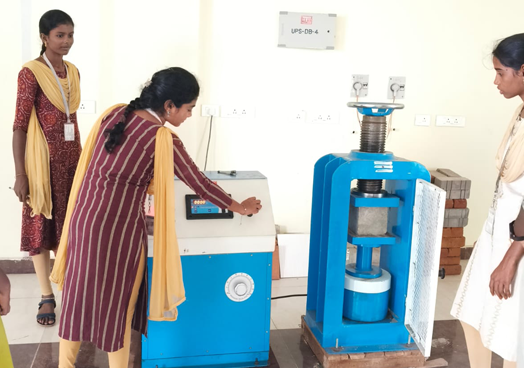
The Department of Civil Engineering houses well-equipped laboratories that provide students with essential practical exposure to understand theoretical concepts and apply them in real-world situations.
Key laboratories include:
These laboratories serve as a foundation for both academic learning and research innovation, enabling students to transform theoretical knowledge into engineering solutions.
Civil Engineering graduates from UCE-Pattukkottai are equipped with the technical expertise, analytical ability, and practical knowledge required to succeed in diverse career domains.
They can pursue opportunities in:
These laboratories serve as a foundation for both academic learning and research innovation, enabling students to transform theoretical knowledge into engineering solutions.